
Live Science Verdict
These binoculars are made for the outdoors and are perfect for birders. The optics are sharp, colorful and have excellent contrast, and they’re built to withstand the elements. Their awards are well-deserved.
Pros
-
Excellent build quality
-
Fantastic optics
-
Premium accessories
Cons
- –
Not the most lightweight 8×42
- –
Some softness around the edges
Why you can trust Live Science
Our expert reviewers spend hours testing and comparing products and services so you can choose the best ones for you. Find out more about how we test.
The Hawke Frontier ED X 8×42 are aimed at those who actually spend time using binoculars, not just comparing the specs on paper. This model sits in the midrange of the market, promising sharp, color-accurate views and solid build quality at a very reasonable price. With ED glass, an 8×42 format that suits long sessions out in a nature reserve or bird hide and a magnesium body designed to handle a few bumps, they look like a fantastic recipe for birding and general wildlife observation.
We put them through their paces in typical field conditions: tracking birds, scanning landscapes and testing low-light performance. They are consistently voted one of the best birding binoculars under $500/£500, so let’s break down their performance to see if we agree.
Hawke Frontier ED X 8×42: Design
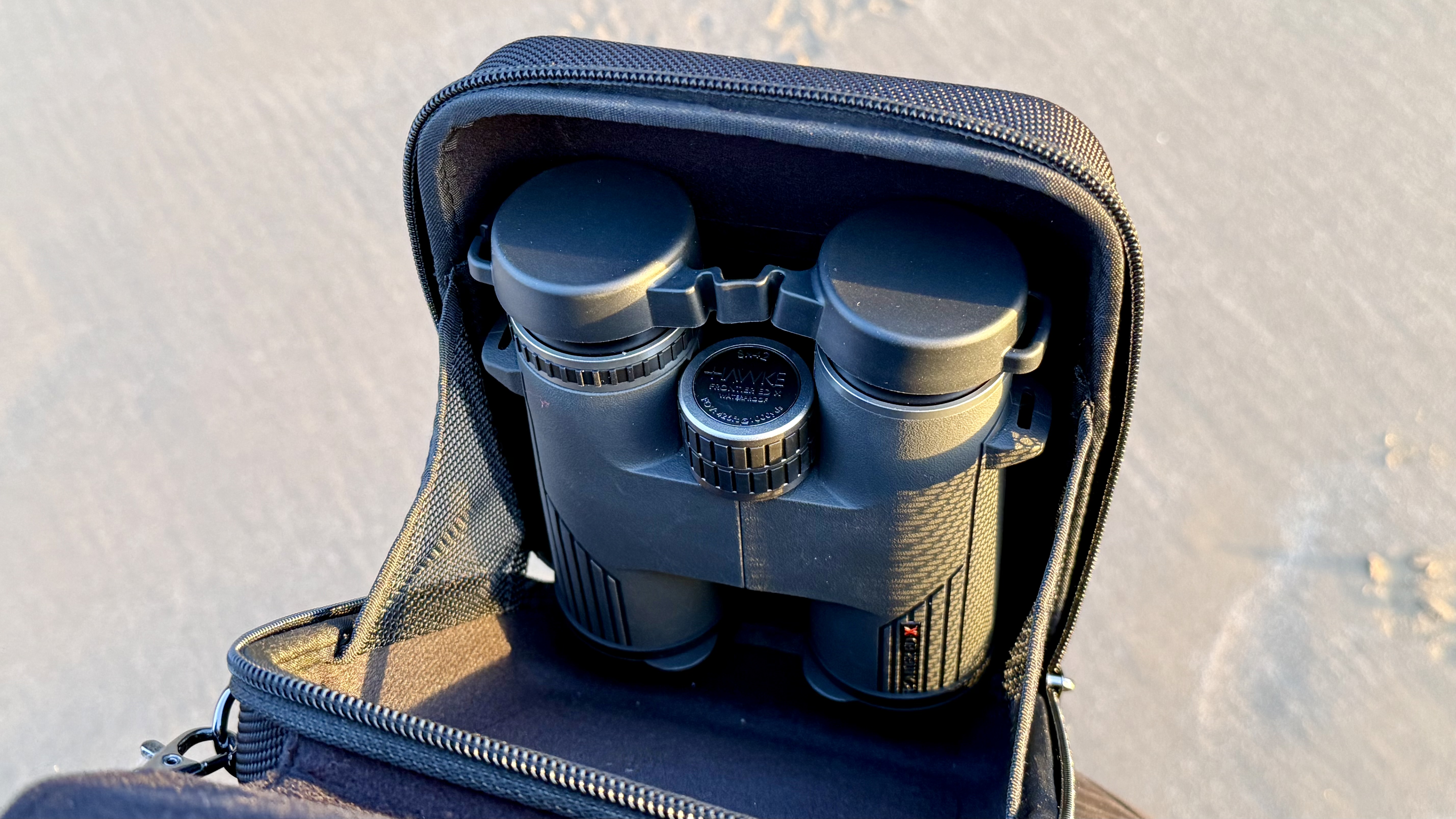
- Premium build on all components and accessories
- Comfortable neck strap and clever carry bag
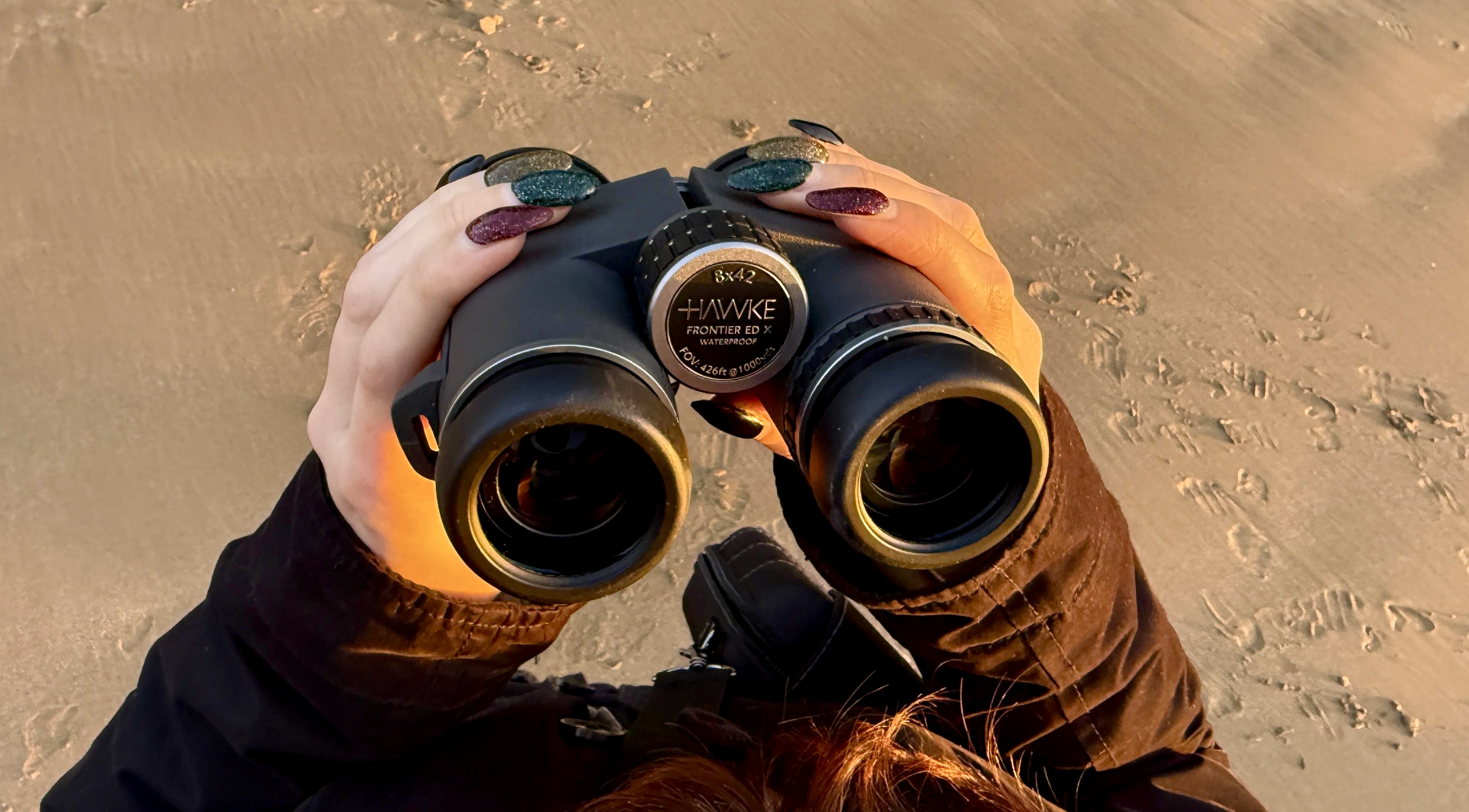
- Solid in the hand and pleasant to use for long periods
The Hawke Frontier ED X 8×42 has a solid and premium feel all over. The magnesium alloy chassis offers rugged and durable handling that, although we wouldn’t want to drop them, makes us feel like they could definitely withstand a knock or two. The textured rubber grip gave us a secure hold on them, and the stylish design accents and silver accents on the body are a nice touch.
Key specs
Magnification: 8x
Objective lens diameter: 42mm
Field of view: 8.1-degrees / 426 ft @ 1,000 yds
Eye relief: 18mm
Exit pupil: 5.3mm
Close focus: 6.6 ft / 2 m
Weight: 25.6 oz / 725 g
The replaceable twist-up eyecups offer three viewing positions, and the interpupillary distance of 56-74mm suits a range of face sizes and eye placements. The focus wheel and diopter are reassuringly sticky, although our reviewer tended to favor the slightly looser focus wheel on the Olympus 10×42 Pro pair we were testing alongside them. They also feature a tripod filter thread to allow for sturdier observations, like nighttime astronomy or if you’re focusing in on a bird nest or feeding station for a long period of time.
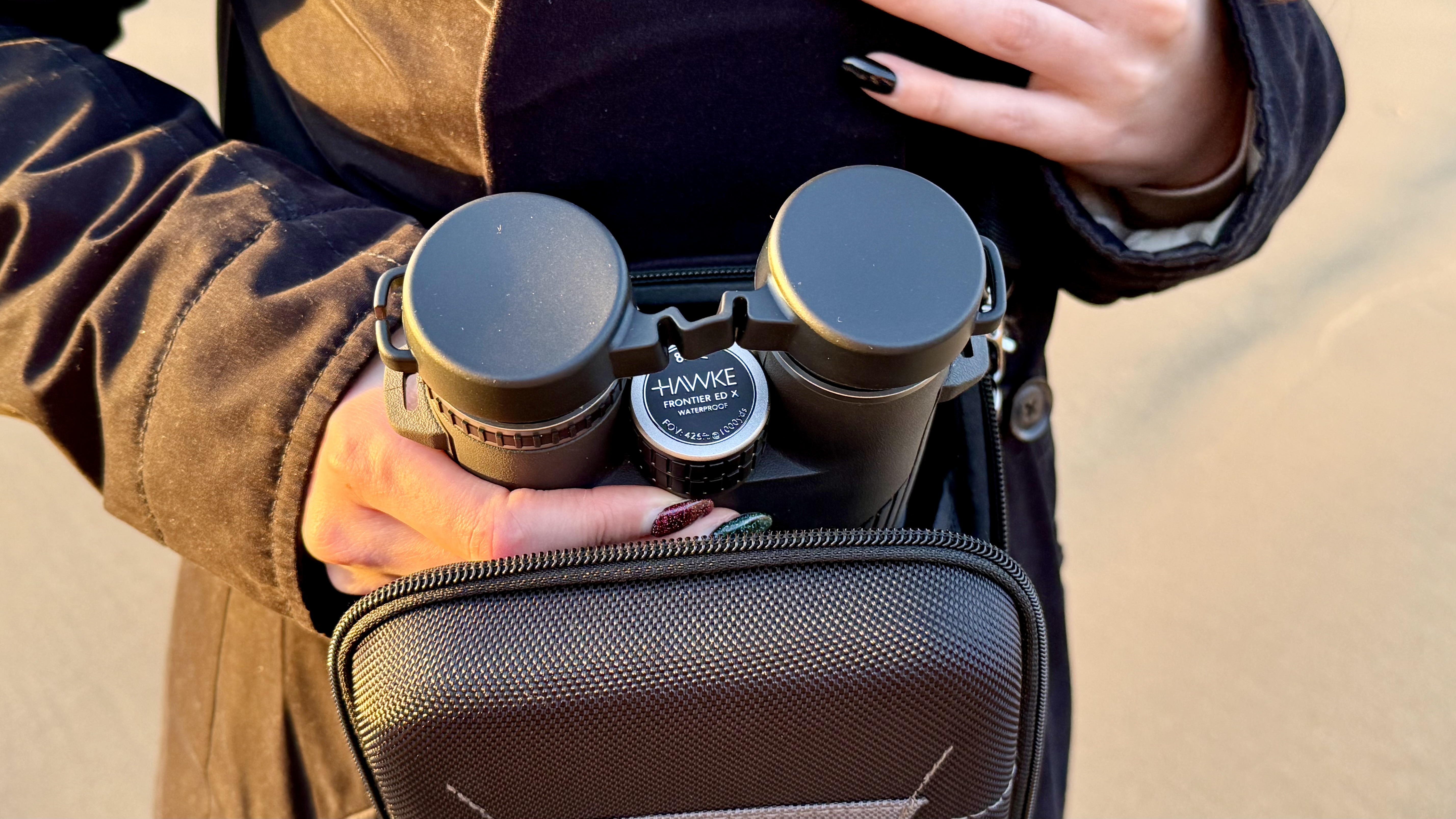
Weighing 25.6 oz (725 grams), they’re lightweight but feel solid in the hand, and we found them comfortable to use for long birdwatching sessions. The included neckstrap is wide and padded, and probably one of the most comfortable we’ve ever used. It also includes a cleverly designed carry case, which looks and feels somewhere between a bag and a box or hard case with a zip and magnetic closure. There are mesh panels on the inside to keep the binoculars from falling out, which means you don’t have to zip the bag up; you can just undo the magnetic closure and access the binoculars quickly and easily when out in the field. There is a pocket on the back, but it’s so tight you can’t actually get anything in it — it would’ve been the perfect place to slip a smartphone into.
Hawke Frontier ED X 8×42: Performance
- Barely any chromatic aberration thanks to ED glass
- Excellent for tracking birds with a wide field of view
- Sharp, colorful views — slight softness at the edges
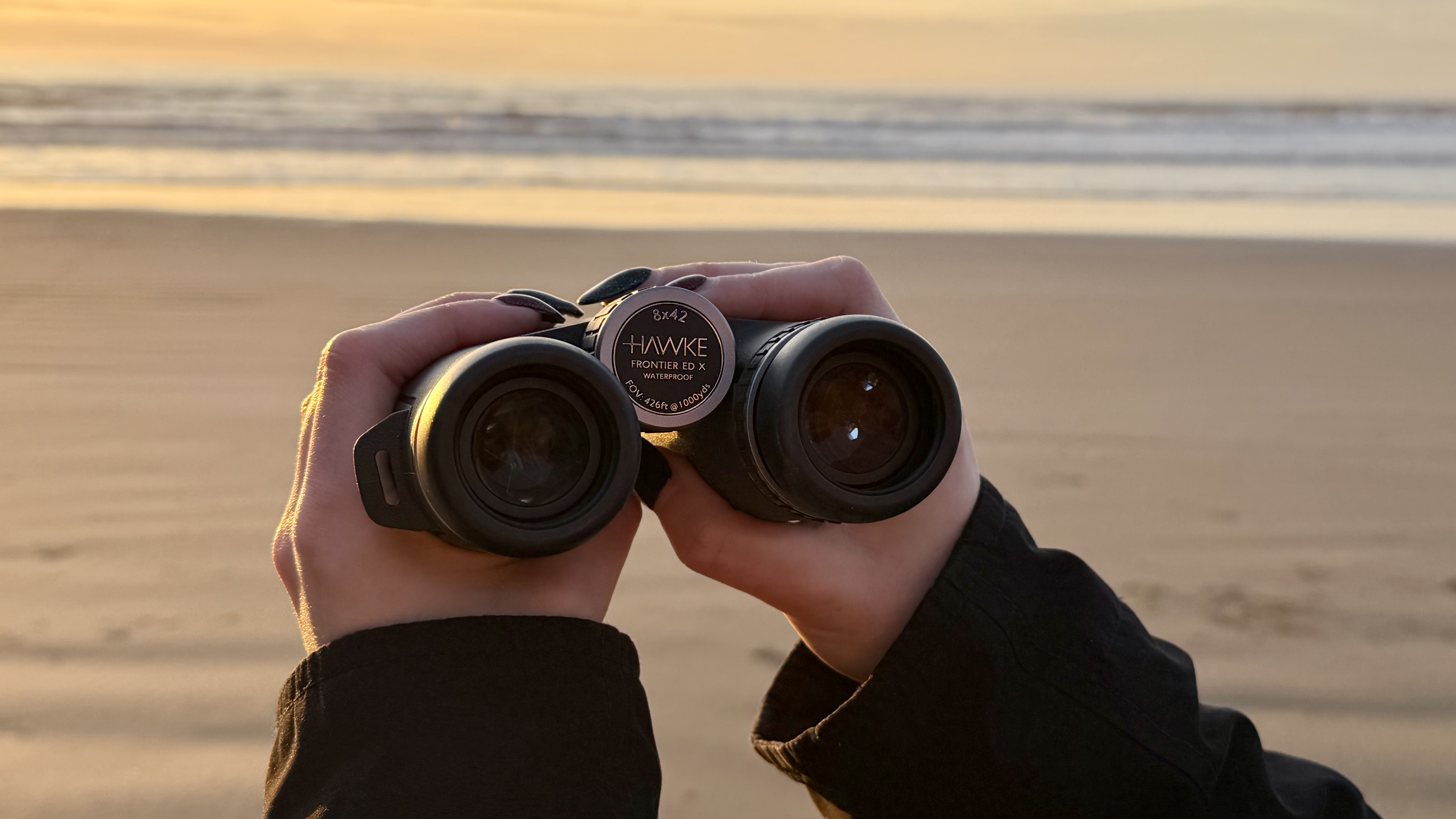
Looking through the Hawke Frontier ED X 8x42s feels like you’re practically sitting in the trees with the birds. The immersive view is crystal clear, with incredibly sharp views in the center, and we were impressed with the color reproduction and contrast. The ED (Extra-Low Dispersion) glass eliminates pretty much all chromatic aberration, although we were still able to spot a tiny sliver around highly contrasted subjects — but it won’t be noticeable unless you’re specifically looking for it (like we were).
We noticed some veiling glare at the bottom of the image circle due to the reflection of the sky, but this went away when we moved the binoculars up or down and the scene was evenly lit. The image is a little soft at the edges of the frame, but as we tend to center our subjects when observing wildlife, this was never too much of an issue.
While 42mm isn’t the largest objective lens diameter for stargazing, we were still able to see a lot of stars. We could identify the Andromeda Galaxy and the Orion Nebula, but we couldn’t see any of Jupiter’s Galilean moons — you’d need higher magnification for that. Although the Hawke Endurance ED 10×50 we were testing alongside this pair was noticeably better for low-light observations, the Frontier ED X 8×42 would still be good for sweeping across the sky in your backyard or on a camping trip.
Hawke Frontier ED X 8×42: Functionality
- Dielectric prism coatings for enhanced light transmission
- 6.6-feet (2 meter) close focusing distance
- Waterproof IPX7 and fogproof
The 8x magnification is often referred to as the sweet spot for birdwatching, being powerful enough to give a good view without becoming too shaky. The wide 426-feet (130 m) field of view gave us plenty of space to follow birds through the sky, which we found much easier to do than with a 10x pair we were also testing. We spotted a ton of birds from our front doorstep, including goldfinches, red kites, different types of tit and even a bullfinch.
Outdoor binoculars need to handle the elements, and the Frontier ED X 8×42 are nitrogen-purged to prevent fogging when moving between warm and cold temperatures, and the multi-coated lenses have a hydrophobic coating to repel water — plus, they’re waterproof to an IPX7 level.
The BaK-4 prisms have dielectric coating for enhanced light transmission, which works in tandem with the 42mm objective lenses to produce clear, bright views. The 18mm eye relief is generous, and we had no problems getting a perfect view when we used them either with or without glasses.
With a 6.6-feet (2 m) close focusing distance, they’re also great for getting a closer look at large insects and flowers. That’s not quite close enough for the ED X 8×42 to be suitable for true macro viewing or bugwatching — but then, they don’t claim to be.
Should you buy the Hawke Frontier ED X 8×42?

Based on their build quality, comfortable handling, excellent optical quality and being tailor-made for outdoor use, it’s hard not to recommend these binoculars — particularly for the price. They’re an ideal birding companion that’s built to last, and their specs are versatile enough to lend themselves to other activities like casual stargazing.
They fit the bill very nicely if a good quality birding binocular is what you’re looking for, but they’ll miss the mark if you’re looking for a small, pocketable compact binocular or a large pair of astronomy binoculars.
If the Hawke Frontier ED X 8×42 isn’t for you
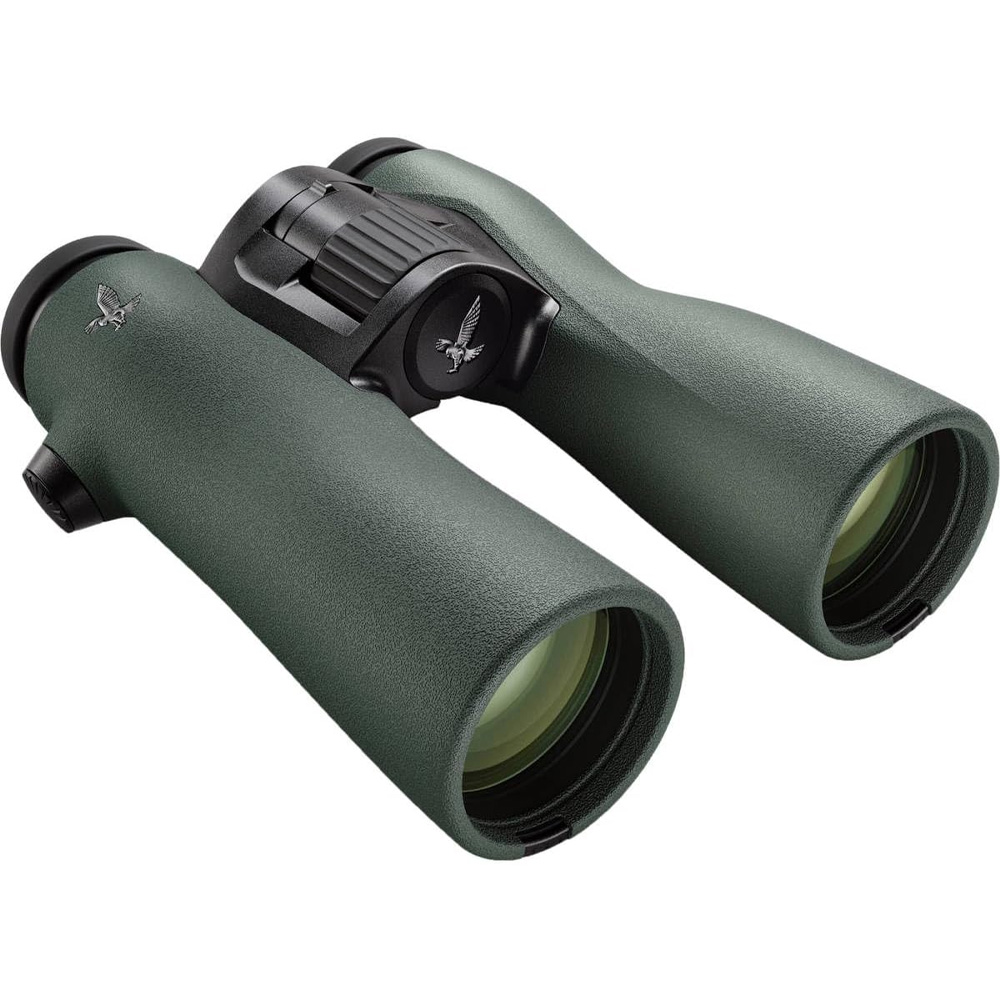
If you want the best image quality money can buy, the NL Pure range is made for nature lovers (as the “NL” denotes) and is one of the best pairs of binoculars we’ve ever used. If you can afford them, you won’t regret it.
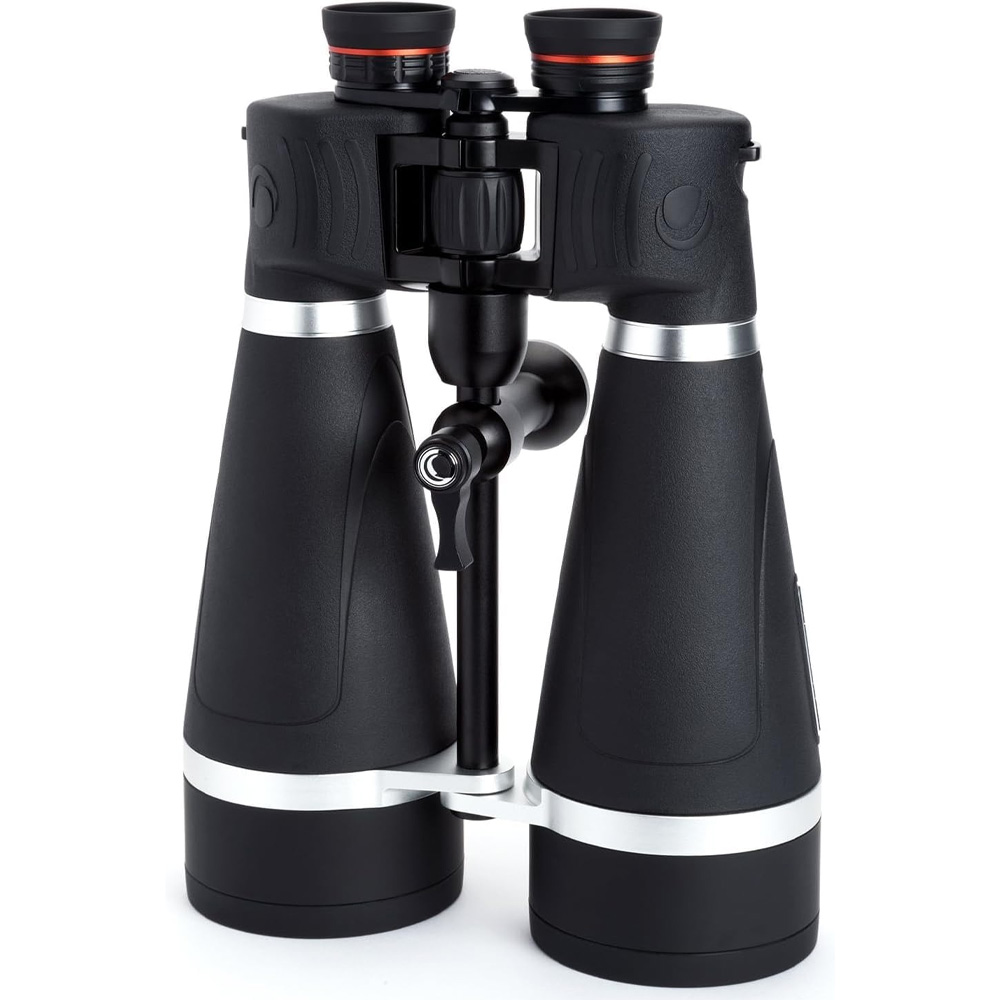
Celestron SkyMaster Pro 20×80
If you’d rather observe the night sky than what’s here on Earth, you’ll want big astronomy binoculars. These massive binoculars need to be mounted on a tripod, but you’ll be rewarded with views of Jupiter’s moons, the Andromeda Galaxy and more.

Kimberley Lane, E-commerce writer for Live Science, has tested a wide range of optical equipment, reviewing camera gear from Sony, Canon, OM System and more. With over 6 years of photography experience, her skills span across landscape and seascape photography, wildlife, astrophotography and portrait work. Her photos have been featured in a number of national magazines, including Digital Camera World and Cosmopolitan. She has also contributed to our sister site Space.com and Tech Radar, and she regularly uses binoculars and telescopes to stargaze in the dark skies of South Wales.
“>
You must confirm your public display name before commenting
Please logout and then login again, you will then be prompted to enter your display name.


