
Kindness and compassion don’t cost a thing, yet their impact can be life-changing. These 12 stories show how simple acts of care and empathy helped people through hardship, built stronger connections, and reminded us that small gestures can mean the world.
- I was a single dad trying to balance night shifts and caring for my teenage daughter after her mom disappeared. The fridge was almost empty, and I was skipping meals so she could eat.
One evening, a coworker noticed I was constantly yawning and offered to cover my shift so I could rest. I insisted I didn’t need it, but she refused to take no for an answer. She even stopped at the grocery store on her way home and filled my fridge with enough food for a week.
When I tried to repay her, she laughed and said, “You’re already doing enough, just focus on her.” That simple gesture allowed me to sleep through a full night for the first time in months. My daughter was happier and more relaxed the next day. I started feeling like I could breathe again.
It wasn’t charity; it was solidarity. I realized how exhausting hiding your struggles can be. Her small act reminded me that people notice even when you think they don’t. Months later, I still tell her it saved us.
- I had been unemployed for so long that I avoided answering calls from friends out of embarrassment. Savings were gone, and self-doubt filled every silence. I volunteered at a food bank just to feel useful. Helping others distracted me from my own worries.
The coordinator noticed my organizational skills. She encouraged me to apply for a paid role opening soon. I hesitated but eventually tried. I got the job and regained stability.
Giving time when I felt empty somehow filled me again. Kindness often circles back unexpectedly. That experience changed how I define success.


- My sister excluded me from family decisions for years after we argued over our parents’ estate. Distance became our default.
When I faced sudden unemployment, support seemed unlikely. Unexpectedly, she coordinated anonymous financial assistance to cover bills and essentials. She sacrificed personal savings to do it. Her own household felt the strain, but she persisted silently.
I discovered her help only through accidental documentation. She didn’t seek acknowledgment or reconciliation. That quiet generosity stabilized my life at a critical moment. It softened my anger toward her gradually.
We never addressed the past directly. Actions, not words, rebuilt some trust. Her support mattered more than the earlier conflict. The cost she paid remained private. I still reflect on how kindness can arrive silently, yet powerfully.
- A neighbor of mine, a single mom, was struggling to pay her rent while working long hours and caring for two kids. One of her coworkers noticed she was constantly exhausted and quietly offered to cover her shifts when needed. Another coworker organized a small fundraiser to help with bills.
One evening, someone even picked up her kids from school when she was running late. She didn’t ask for help, but they insisted anyway. Over a few weeks, her stress visibly decreased. She stopped showing up late to work and looked healthier. The kids seemed calmer too.
No one made a fuss or asked for thanks. They just acted. I watched it all unfold silently and realized support isn’t always dramatic. Sometimes it’s the small, repeated actions that make life manageable.
They saved her household without ever needing acknowledgment. That consistency was what changed everything.
- I had been homeless for two months after losing my apartment and was hiding in a park to avoid police or judgmental eyes.
One morning, a woman walked up with two sandwiches, a thermos of coffee, and a backpack full of warm clothes. I froze, not expecting anything. She smiled and said, “I was in your shoes once, and someone helped me. Let me do the same for you.”
She didn’t lecture, just handed me the bag and left a note with a phone number for temporary housing programs. I didn’t know how to thank her. Over the next few weeks, she checked in quietly, sending text updates about open beds in shelters and volunteer shifts that could pay small stipends.
I eventually moved into a temporary room and started saving for my own place. Her acts weren’t flashy, but they were life-changing. I slept through a full night for the first time in months.
The sense of safety she gave me can’t be quantified. It wasn’t charity; it was empathy in motion. I still think about her every winter. That small gesture literally saved me from despair.
- I was struggling to feed my kids during a snowstorm when a stranger knocked on my door with warm meals and blankets. I thought she was a volunteer from a charity, but she said she saw me struggling last week and couldn’t forget it. She also helped me figure out a small loan so I could pay overdue bills.
When I thanked her, she laughed and said, “You’d do the same if someone needed you.” I cried for the first time in months. The kids were warm, fed, and calm for the first time in a while. That night, I finally slept.
She left quietly the next morning. I never saw her again. I don’t know her name, I just know she showed up. That act kept my family together. I still think about her sometimes.
- I was struggling with anxiety so severe that leaving home felt impossible most days. Therapy was expensive, and progress felt slow.
One morning I forced myself to attend a community yoga class. I nearly walked out halfway through. The instructor noticed and quietly adjusted the pace for me. She never singled me out or asked intrusive questions.
After class she simply said, “You showed up, and that’s enough for today.” Those words stayed in my mind all week. I returned to the next session feeling braver.
Small encouragement can feel revolutionary when you’re barely holding on. Healing started with being accepted as I was.
- My father always favored my older brother, leaving me to feel like I was constantly competing for attention. When I got married, my in-laws treated me like an outsider, which only reinforced my feelings of being unwelcome.
Years later, my husband lost his job, and the bills started piling up fast. Without telling anyone, my father arranged for a long-term loan to cover our rent and utilities. He adjusted his own spending, cutting personal luxuries to make it possible.
He never explained it or asked for thanks, and my brother still held grudges about perceived favoritism. I only discovered the help months later when the bank mentioned his name. The support allowed me to focus on finding a new job without panic.
He never expected reconciliation or closeness from me. It was simply a gesture he felt was necessary. Slowly, our family interactions became less tense. His quiet decision removed a layer of fear I had been carrying.
I began to appreciate his intentions despite our complicated history. That act of kindness shifted how I thought about family loyalty. Actions, not apologies, carried the weight this time.
- An elderly man in the park always fed pigeons but never accepted help. One winter, I noticed he looked weak and sickly.
A woman in a nearby apartment started leaving him hot meals and blankets every morning. Eventually she bought him proper shoes and winter clothes. Nobody else noticed. He never asked for help, but she persisted anyway.
Months later, he was walking taller and looking healthier. I asked him about it, and he just said, “Some people notice when you need it most.” The effort was silent and consistent. The woman sacrificed her mornings and money without recognition.
It changed him more than anyone realized. That’s what real kindness feels like. I never saw anyone act like that before. It stayed with me.
- I was a single father trying to comfort my son after his mother left unexpectedly. He cried every night asking why she didn’t want us.
At the playground, another parent overheard and muttered, “Kids need mothers, not excuses.” I felt anger and shame mixing together. My son heard it too and went quiet.
A grandfather nearby invited us to join his chess game. He treated my son like an equal, joking and teaching patiently. My child laughed for the first time in weeks. The old man said families come in many shapes.
That moment helped me believe I could be enough. Sometimes strangers repair wounds words created.
- After my mother remarried, I struggled to feel like part of her new household. Her stepchildren were close with her, and I often felt excluded.
When my mother fell seriously ill, I feared there would be no one to manage the day-to-day care efficiently. Unexpectedly, one of her stepchildren stepped in, covering appointments, transportation, and meals without me asking. They sacrificed weekends and extra work hours to help.
I later found out they had also contributed financially to cover treatment costs I couldn’t afford. They never mentioned it directly, insisting it wasn’t important. Their partner wasn’t happy about the sacrifices either, but they persisted silently.
Over time, the support created stability for everyone. It allowed me to focus entirely on my mother’s emotional needs. Conversations gradually softened as tension faded. We didn’t need to address past resentment; the actions spoke for themselves.
That quiet reliability reshaped our family dynamic without fanfare. I began seeing them not as a step-relative but as an ally. Sometimes loyalty is shown in what people do, not what they say.
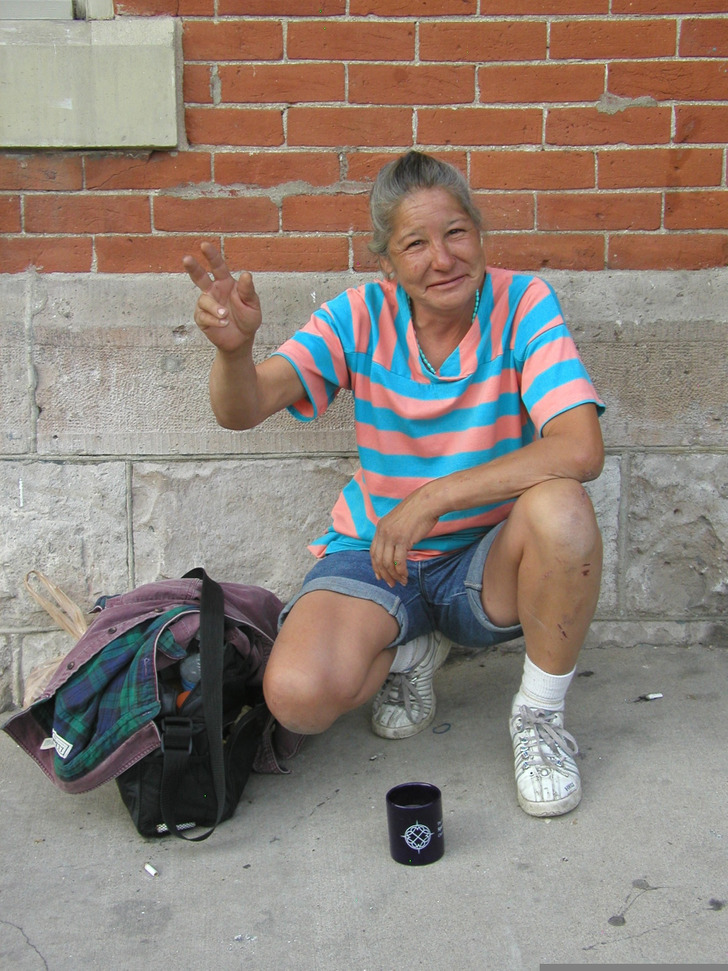
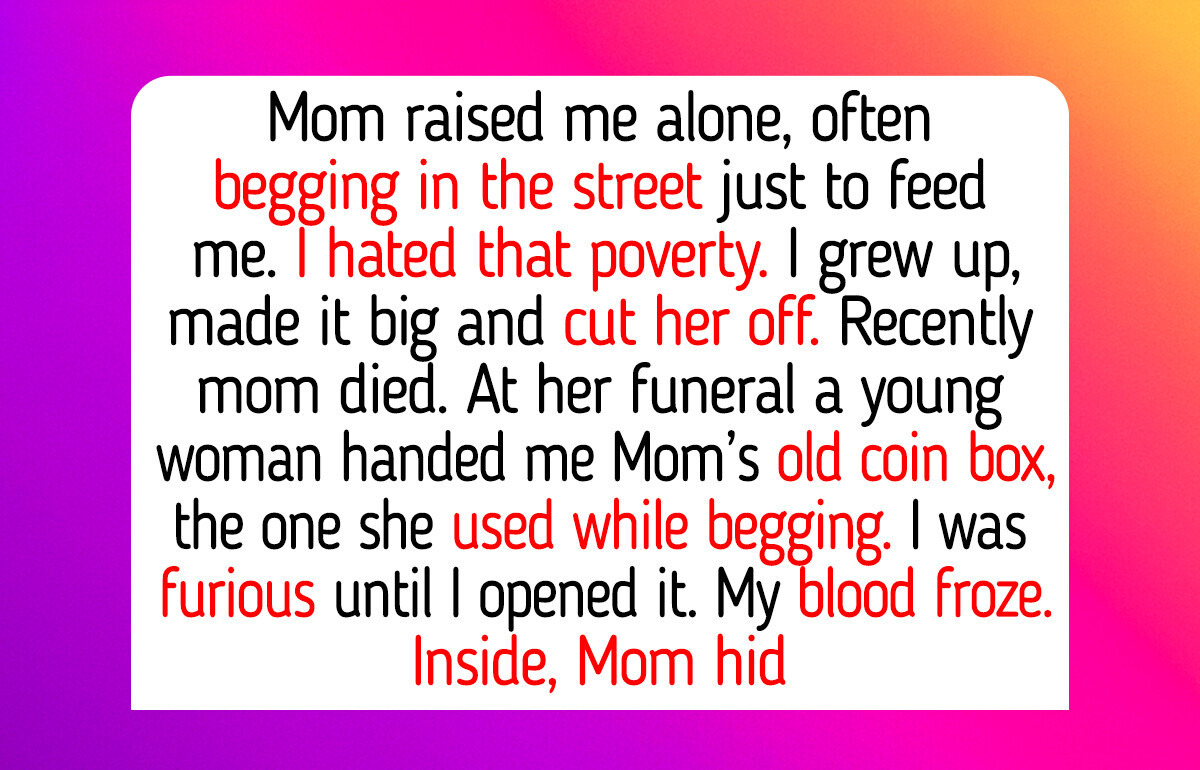
- Mom raised me alone, often begging in the streets just to feed me. I hated our poverty. I grew up, made it big, and cut her off.
Recently, she died. At her funeral, a young woman handed me Mom’s old coin box — the one she used while begging. I was furious… until I opened it. My blood ran cold. Inside were pieces of valuable jewelry I never knew Mom had.
Later, the young woman, Rosa, explained everything. My father — who had always ignored us — was dying and, for the first time in his life, felt guilt. He asked his relatives to give Mom a sum of money. Mom, gravely ill, never spent a cent on herself. Instead, she bought jewelry and saved it for me, secretly creating an emergency fund in case I ever needed it.
In that moment, all my resentment and anger collapsed. Mom, the woman I had abandoned, had loved me unconditionally — even after her death.
Kindness is often mistaken for softness—until it changes the entire outcome. These 12 moments show how choosing empathy and compassion over ego disarmed conflict, shifted power, and proved that real strength doesn’t always look loud or aggressive.
Comments

You don’t deserve your mom. She was an angel, but you never noticed it when she was alive.